


Island survival

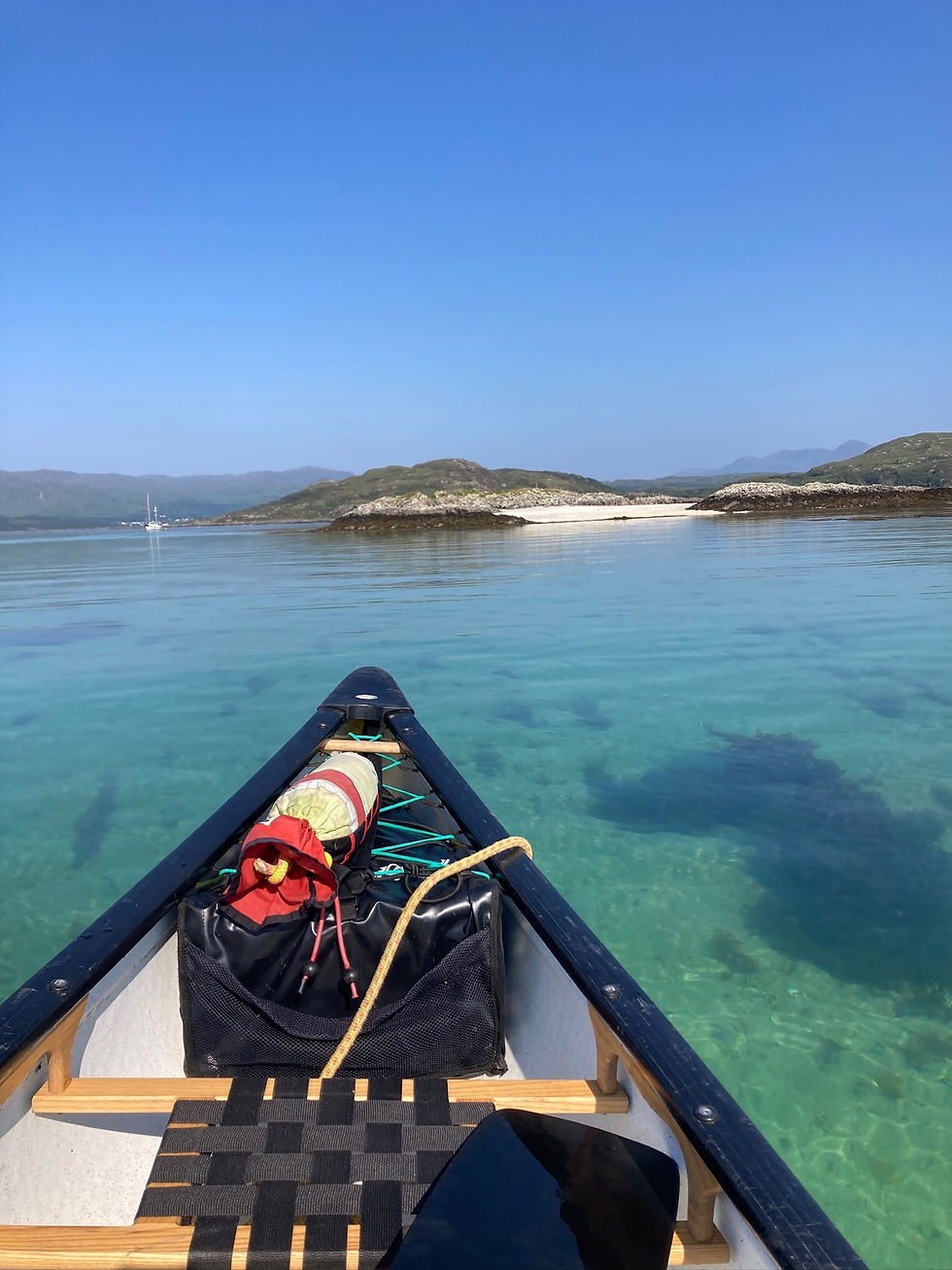
On a blustery July morning, I canoed across 2km of white capped sea to reach a remote, uninhabited island off the West Coast of Scotland. It was no ordinary trip - I planned to spend a week alone with minimal kit, as close to real survival as safety would allow. I felt this was long enough to provide challenges and test short-term survival skills.
I didn’t bring any food, but strictly for emergencies carried water, a first aid kit, tarp and sleeping bag. The canoe and phone were my safety links to the outside world, but I was relying on just a few simple tools (firesteel, knife, pot, filter bag) and my knowledge to get me through.
The island was wild and isolated. It echoed a real survival situation and offered solitude in a stunning location. The land mass was around 60 acres, vegetated with bracken, grass and heather and at its highest point was less than 20m above sea level. There were very few trees, mostly patches of dwarf willow which reminded me of the Icelandic saying - “if you get lost in the woods, just stand up”. To compensate for the lack of woodland, the rocky beaches provided a generous supply of driftwood for fires.
It was essential to have minimal impact during my visit. I wouldn’t cut any of the limited wood to make a shelter. My aim was to use a rock shelter and I soon found a suitable overhang with a crevice underneath. I propped some driftwood boards on top of rocks to make a flattish bed and then lined it with bracken which was super-abundant.
Finding and adapting a natural rock shelter — using driftwood boards for a makeshift bed beneath the overhang.
A small pond was situated about 150m from the shelter and I filled containers with the disconcertingly yellow water. Back at the camp, two filter bags were used to sift out the algae. This became part of the daily routine, usually making teas with either nettle or bramble leaf.
My first “meal” was a handful of raw limpets – it was important to discard the gut and wash the edible part. I also ate some raw plantain seed heads which are high in carbohydrates and were abundant – this became a regular breakfast. It was important to put fuel in the tank from day one!
The island’s small freshwater pond provided my water for the week. Filtering the pond water became part of my daily routine. Handmade lure using a feather, rope strands and safety pin.
The pond, water filtration, and a hand-made lure using found materials.
I had to quickly form a mental map of the island to get around and re-locate things efficiently. I started naming particular features such “owl’s head rock”, or “pointing white finger rock” and could maintain my direction by heading for distant landscape features. Even though the island was criss-crossed with red deer tracks it was easy to take the wrong turn and waste energy.
My arrival coincided with a spring tide. There are two spring tides every month which are the tides with the greatest range. They occur around full and new moons. On the first three days this provided access to razor clams, buried in the sand way down the shore. Winkles and limpets were abundant throughout the challenge. These are high in protein and quite chewy, but really not bad when smoked on the embers. I also found a few patches of mussels here and there too.
It is worth noting that at this time of year you have to be careful about eating bivalve shellfish such as mussels and razor clams. When phytoplankton (microscopic algae) undergo local population explosions (‘blooms’) in summer and are then accumulated in filter feeders like clams they can make you ill. This is usually gastric sickness, but some species can cause serious neurological issues. For this reason I checked the local data on algal blooms in advance to ensure it was safe – this data is posted on CEFAS website:
If unsure about algal blooms it would probably be safest to avoid clams between May and August (inclusive).
Other additions to the diet were seaweeds – I dry fried some dulse, channelled wrack and also laver. The salt content of seaweed meant I didn’t overdo the consumption. There were also a few tasty, land-based plants like scurvy grass which is succulent and has a sweet mustard flavour.
Nights in the shelter were passed wearing my sheep’s wool bushcraft smock (‘Swanny’). Although I knew that a good night’s sleep was unlikely I wanted to emulate a real survival situation where you have minimal kit. Though days were usually warm and sunny, as the sun dropped, so did the temperature. As expected my sleep was disrupted and I only averaged around 4-5 hours per night. The problems were cold, temperature imbalance (between lower and upper body), a bracken bed which felt harder as the night went on, and sometimes midges appeared! The other problem – wearing shoes both day and night was creating constant moisture and causing soreness. Trench foot was a potential risk if the situation continued so I aired my feet, socks and shoes whenever possible at the camp. These are the kinds of unexpected, small issues that can create big problems if not recognised and addressed.
To keep shoe-less feet warm at night I emptied my day pack and put them inside, along with a bottle of boiling water. I tried to block drafts and add to my bedding, but it was still a challenge. Several nights I got up in the dark, feeling cold, lit a fire and re-filled my hot water bottle. One moonlit night I saw two deer, silhouetted against the nearby skyline. On another occasion, I was lying awake in the shelter when a bat briefly fluttered into the entrance, inches above my body!
On the second day I found a partially buried crab pot. With effort, I dragged it out of the sand, but the door was missing and there were tears in the netting. Later by sheer luck I found a separate door on another beach which fitted perfectly! I attached it, repaired the holes, untangled some rope, found a buoy – I then had a functional creel. Over the course of the week I managed to catch around 8 velvet crabs. They made a delicious addition to my diet – sweet, tasty and quite filling. My preferred method was to grill on the embers. One afternoon I watched an otter fishing off the rocks. It also caught a velvet crab and opened it on the rocks in front of me before slipping back into the water. It felt like a nice connection – we were both catching and feeding on the same prey!
The found crab-pot, repaired with a door discovered on another beach. Velvet crabs caught in the repaired creel made a welcome addition to the diet. Spring tides gave access to razor clams buried in the sand low down the shore.
A washed-up and repaired creel, delicious crab catch, and razor clams.
I had brought along a couple of lures and a hand reel so tried fishing off the rocks. Though I got a bite early on, the lure quickly got caught and broke away on some nearby kelp. I carefully climbed down into the water and managed to retrieve it. A day later it happened again and this time I wasn’t as lucky. Fortunately, on both occasions no line was left in the water.
The loss of the lure led to a project to create a new one. I converted a safety pin from my first aid kit into a hook by breaking it in strategic places between two rocks. I then found a feather and some colourful strands of string and fashioned a lure. The final part was creating a sinker with a rock that was abraded to create a constriction for attaching line. Fishing proved difficult due to a strong onshore wind and although I tried every day, had no luck. For longer term survival, adding fish to the diet would have significantly raised calorific input due to the high fat-protein content. Although I was feeding mainly on shellfish which were protein-rich this was just enough to top up energy levels and keep me happy and functional. During the whole week I lost 5kg which is OK but obviously not sustainable long term. I would likely have fared better had I been prepared to use the canoe but I had decided that this didn’t fit with the realistic survival challenge I had in mind.
Accidents can apparently come out of nowhere. At one point I had a little stumble while scrambling over the rocks to check the creel. I pirouetted, fell backward down the slope and landed hard on my backside. No harm was done, but the incident highlighted the importance of extra caution while travelling alone in remote places. The attitude of mindfulness strikes me as so important in a survival situation – remaining focused and observant is not only functionally important but helps in remaining calm.
One unique aspect of coastal survival is the use of drift items. Although we don’t usually care to see rubbish on beaches, in survival it can provide a treasure trove of resources. I already mentioned the crab trap I found and repaired. There were also significant lengths of cordage, and a “bag for life” which proved really handy for collecting things and keeping them dry. Plastic and rubber items could potentially be burnt to generate dense black smoke to signal for help. There were also enough buoyant items to probably build a raft. This included a football which reminded me of Tom Hank’s companion “Wilson” in the Cast Away movie! One surprise find was a whisky bottle with a dram left in the bottom – after carefully assessing it, I decided it would be remiss to forgo this extra calorific input! The glass bottle itself was a potentially valuable find - it could have been used to boil water in absence of a pot.
In the end, the week passed surprisingly quickly. Although carrying a small calorific and sleep deficit, by day 7 I still felt good. It had been a totally self-sufficient, solo experience in a stunning wild place. For sure I could have gone on longer, but I was more than happy to return for a roast dinner and home comforts!
A surprise survival find — “Wilson”, washed up on the island. An unexpected find — a whisky bottle with a dram still left in the bottom. an exceptional roast dinner awaited me on my return!
Wilson and whisky - surprise finds! Back at home, a great roast dinner was enjoyed after the 7-day challenge!
If you would like to experience a similar but less extreme adventure in a small group, check out our two-day Island Survival Weekend. We hope you can join us on a course!
Comments